

-
w/e 8 February
Well, the first week of February has been washed away…hopefully, life will become drier now that all the reservoirs are full to the brim, and overflowing. The potholes are like crater lakes these days. It is now two years’ since getting about on crutches following a second foot operation to remove arthritis. And still struggling with balance issues on dodgy feet. This week saw me take a tumble out of the shower onto the bathroom floor in an ungainly leap ending in a sore heap. My little toe had got caught on the non-slip mat!
Despite all that, I managed to give a talk about a little known scientist who discovered that the Earth’s magnetism had a ten year cycle. I had volunteered to give a talk about John Lamont because he originated in Scotland and ended up in Germany as Johann von Lamont. A fascinating tale of an amazing character who catalogued, with assistance, 30,000 stars as well as his magnetic research, and observations of little moons of Saturn and Uranus. In honour of his research, he was given an honour by a Bavarian monarch thus permitting Johann to use von in his name. John had changed his name to Johann after a few years of living and working in Germany.
I ventured to Exeter by train and then across it by bus and finally on foot given that not one, but two roads near my destination were closed. It was lovely to catch up with a friend before making the return journey. The traffic was appalling, the river in full flood, the place shabby and dull which made me feel glad to be living in a country area and nearer the coast.
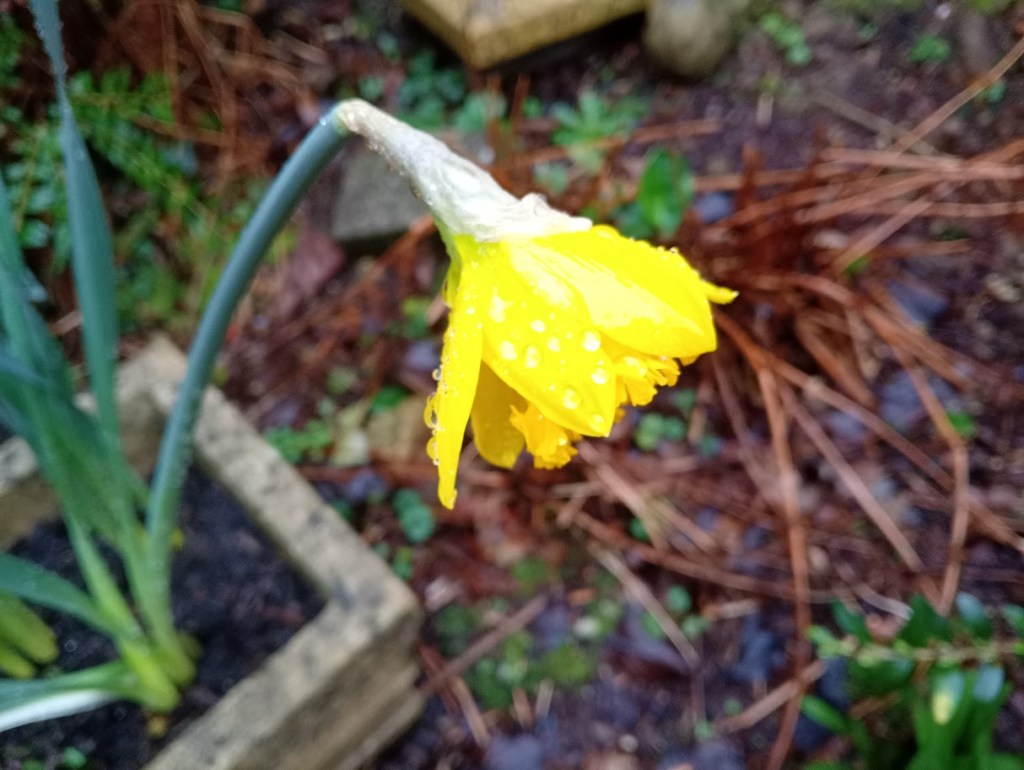
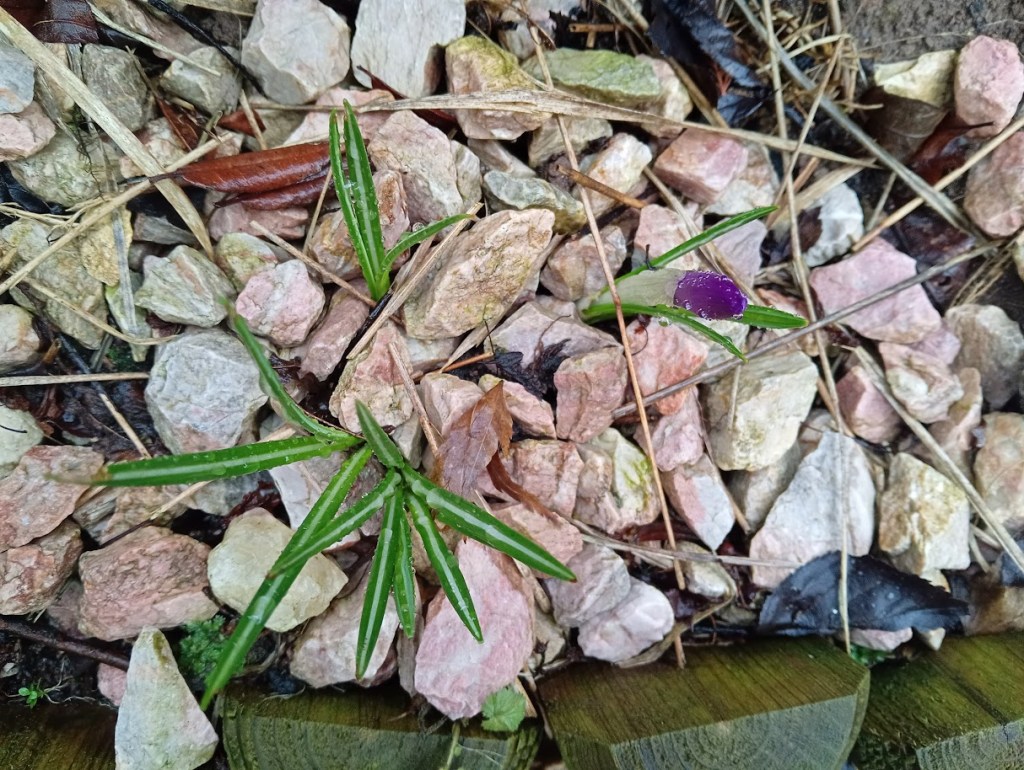
In the garden, a brave daffodil succumbed to the wind and bloomed when bent over. Spears of purple crocus pushed through the gravel despite the frequent deluges. Resilience in action!
-
A great end to January and a brilliant start to February…
On the last evening of the very wet month, we enjoyed a ray of sunshine in the form of a celebratory concert of Mozart’s music from Exeter Opera Group in Topsham. The singers, some of whom were not used to singing solos, performed bravely and magnificently. We were carried away on a sea of sound and emotion. Although the venue had a few heating problems, the warmth of the welcome, the audience, and the performers, this was soon forgotten.
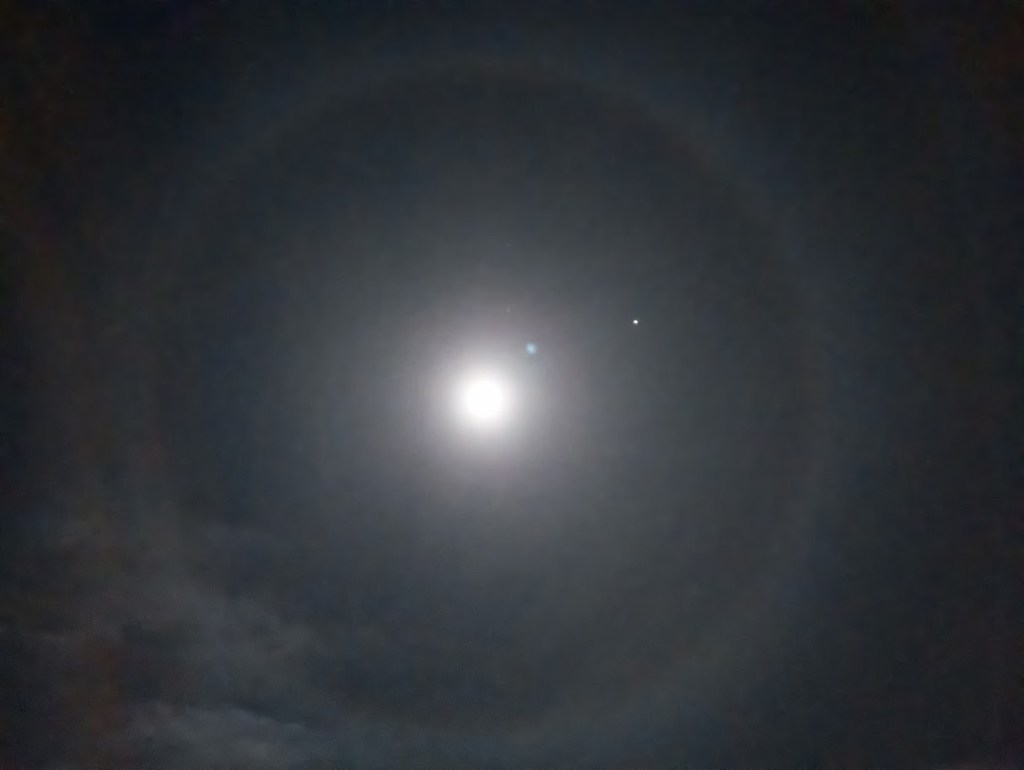
As we came out, a sub group gathered to enjoy the splendour of the Moon and bright Jupiter, encased a beautiful halo of ice crystals lit by the moon’s glow.
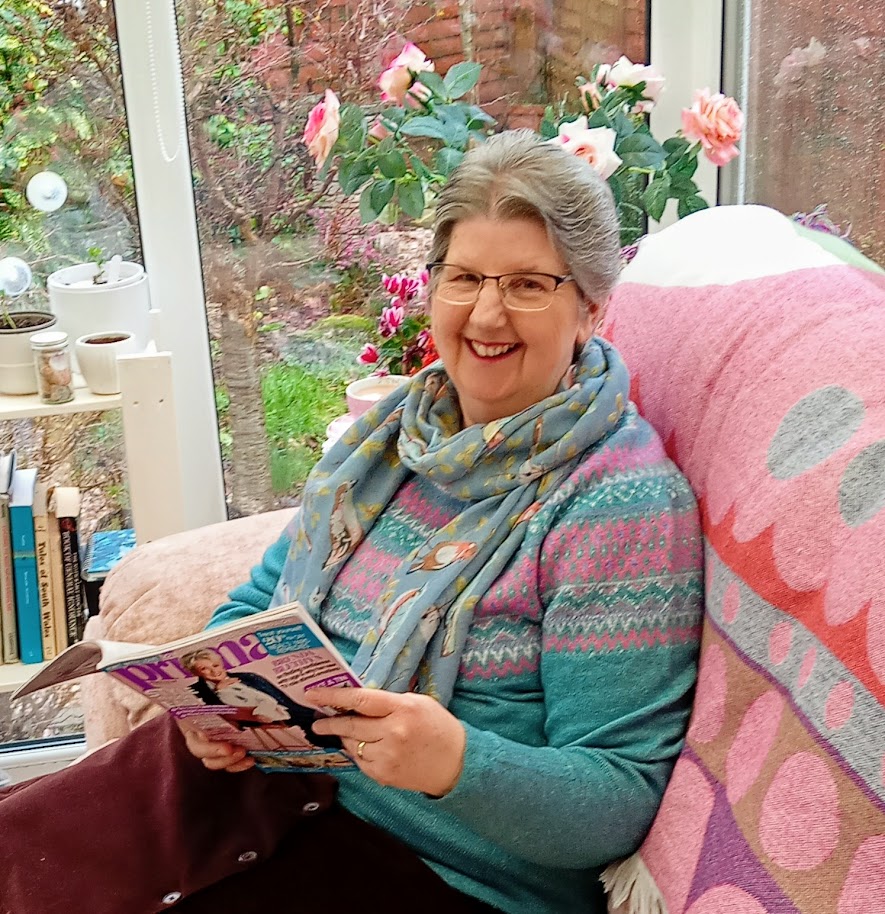
Here I am with a nice cup of tea and a good read…super to see another story of mine in print in the March edition of Prima magazine. It was edited slightly by them but retains the magic of friendship I wished to convey.
The full moon on the 1st means that the rest of February will offer increased better viewing of the stars…if the clouds stay away that is. Fingers crossed! The phases fit nicely with the dates of the month and indeed is similar to the pattern in January when the full moon was near the beginning of the month on the 3rd. You can download and print useful moon observation sheets from the internet. Full Moon on the First is a good place to start logging – just try to observe from the same position each day, shade in the phase on the chart, make a note of the time – again, try to stick to the same time each day. The end result will be a visual of the Moon’s phases along with a better understanding of the Moon’s movement across the sky.
-
w/e 25 January
Uncharted waters. I have realised I should be receiving my state pension next year, and turning 65 has focused my mind on my age for some reason. My sixties are not what I had in mind many years’ ago, but that was before the changes to state pension age for women, and before the pandemic changed the world forever. My view of people in their sixties is coloured by my upbringing amongst elderly grandparents and young parents (my mother was just 23 whereas her mother was 40). In my fifties I had a vision of gently driving along the back roads of England, exploring and stopping at interesting places. Quite apart from the previously mentioned changes, my feet have suffered with arthritis and operations on each foot. The net result is I do not drive long distances any more and find stop-start driving uncomfortable and tiring. I have given a couple of talks recently, and am busily preparing two more. This is something completely outside my parents, and grandparents, world. My grandparents played cribbage, grandad went for walks, grandma did crosswords and crochet, my parents enjoyed drives in the country, bike rides, allotments and cooking. I don’t think anything prepared them for someone like me! The life I lead in so-called ‘retirement years’ is new to me…uncharted waters indeed. I am feeling my way. Exercising to keep fit and supple, still trying to make a viable living from my writing, helping a friend in his 90s to be a recognised space artist. My auntie had a zest for living, my uncle enjoyed creating things out of wood, another friend took up A level maths for fun in her 80s, my mother-in-law in her 80s travelled solo to Canada. All these have helped reformulate my view of aging. No one knows how much time is left and I intend to make the most of it and complete all my outstanding projects as soon as possible.
Taking a peek at the speck of blue sky in a run of wet, windy, days.
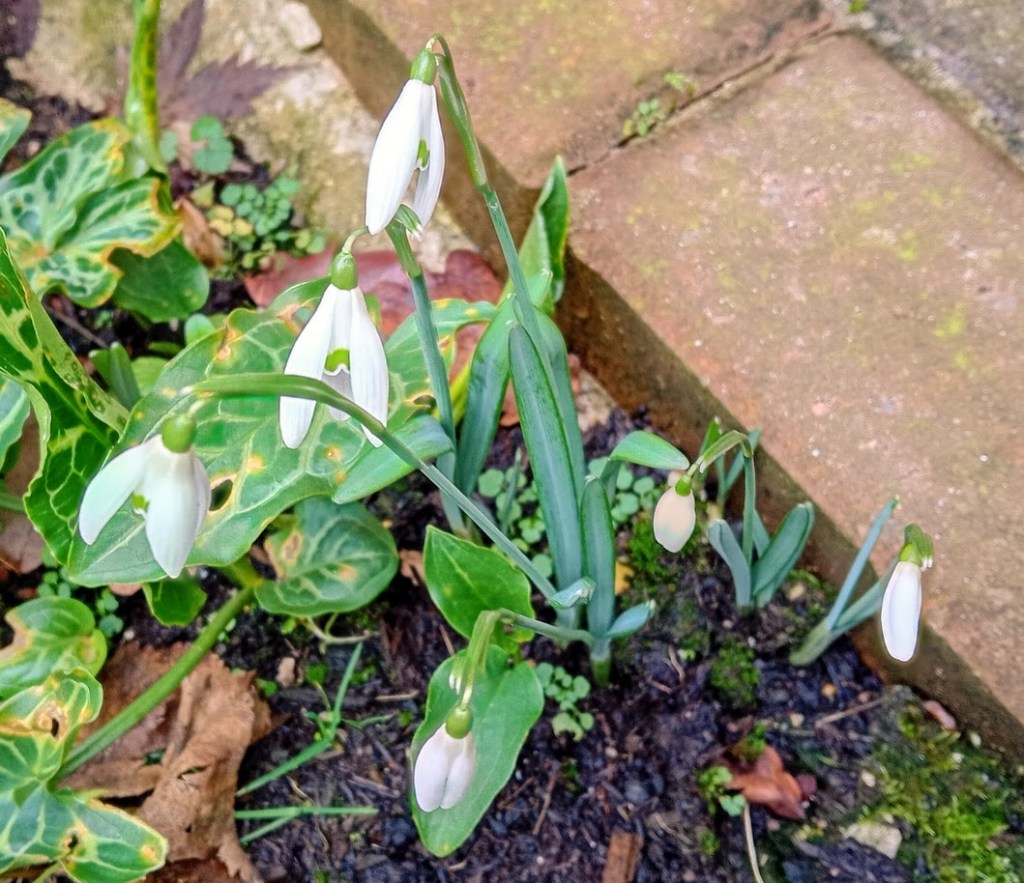
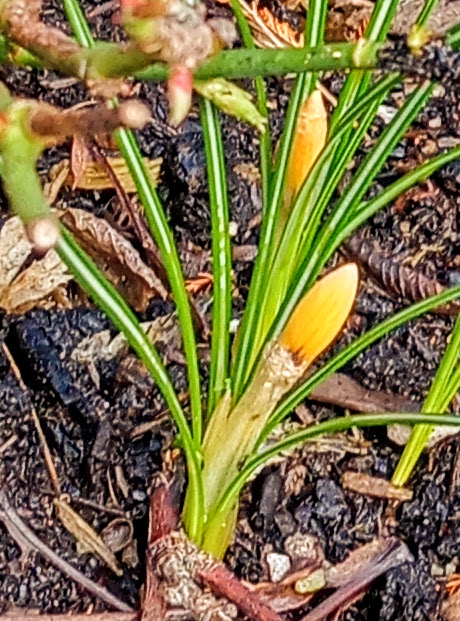
Bravely poking through the soil, the wet soil, despite the deluge and wind.
-
w/e 18 January
Yesterday (Saturday) was a lovely sunny Saturday afternoon…and around 25 people came to Seaton Library to listen to me talk about the stars, the sun, the moon, and the Norman Lockyer Observatory. Great audience, with some wide-ranging questions, and some familiar faces! Thank you to all who came. Stargazing for All is available from Winstone’s Bookshop in Sidmouth as well as Amazon. Just go outside and look up – can you see bright Jupiter near the twins?
There are many articles bounding around at the moment about the bleakness of January with some suggestions of how to bring light (literally) into your life. What about the reverse though and embracing the dark…and enjoying the stars, the cosy nights in, the chance for the body to rest and recover from the busyness of Christmas and last summer. I bring out my green vases and have some dried Autumn grasses in a vase on the windowsill, while in the lighter, summery months, I bring out my white floral vases. Red and green lend themselves to the winter season by bringing warmth into the home. Initially struggling with not having work to bring structure to my week, I do not miss having to get up early on a dark, wet morning and coming home in the dark. To be honest, I also struggle with the couple of weeks in high summer that are invariably too hot while also trying to make the most of the extra daylight…
Living more seasonally is often promoted for more sustainable eating patterns but could equally apply to living patterns. With electric light, we have become used to staying up as long as we like rather than have natural cycles of near hibernation counterbalanced by busy periods of outside working.
On the subject of seasonality, I am working on a series of short stories taking young people through the events of the year and explaining the origins of various events. Many people enjoy the gift-giving, the feasting, the decorations, the parties of the winter season without embracing the origins, either Saturnalia or the birth of Christ. I feel we have been conditioned to ‘spend time with family’ whatever that means, feast, have fun, give gifts regardless of personal circumstances. It is that that puts people under pressure unless you have a fairly relaxed view of the 25 December. ‘Christmas’ can be celebrated around the actual date of 25th although the enjoyment of singing of ‘Come all ye faithful’ in its entirety can only fully be appreciated on Christmas Day.
Looking at the week ahead, the sun is gradually moving back towards getting up at 8 o’clock so the end of the dark mornings is in sight. Meanwhile, the evenings have been steadily getting lighter for a while now moving back towards 5ish. Have a good week! And make the most of those dark evenings…
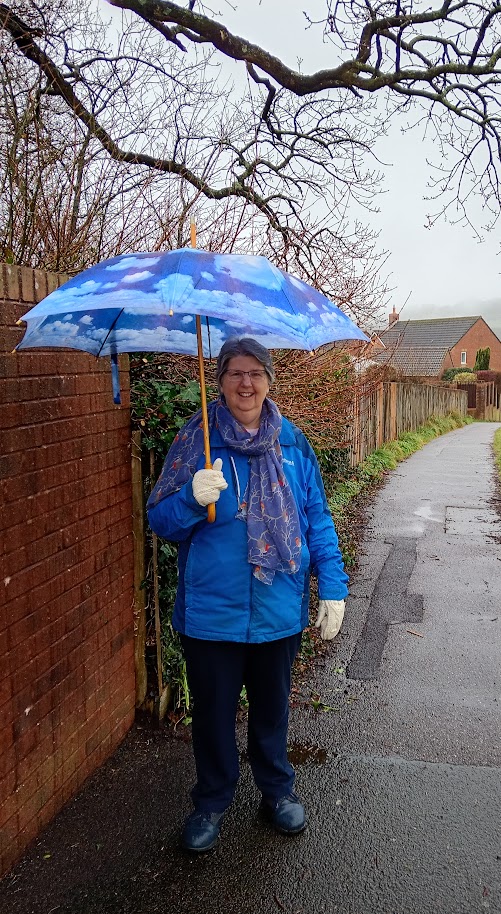
A happy blue image for Monday
-
w/e 11 January 2026
Well, it’s been a cracking start to the new year with an outing to Royston Lake and a trip to Topsham Rugby Club to enjoy ladies rugby…for my husband Royston’s birthday weekend treats. In all the years I have lived in Honiton, I had not been to the area around Otterhead Lakes let alone seen the name Royston Lake, although to be fair, it was not something on my radar. Nevertheless, it is an unusual name. But not only that, there are two large tumuli next to the road to Taunton which I had not seen either, even though I have driven along there many times. Rugby is not really my ‘thing’ but the game was reasonably fast paced and the team had been coached by Roy’s son so it was good to support him. The chat with friends and the hot chocolate and cake in front of the log fire were much enjoyed, too.
With the lighter evenings gradually returning it is worth wrapping up warmly to enjoy Jupiter at opposition. What does this mean? It means that the massive, bright planet is opposite the setting sun so it’s easy to find in the night sky. I saw it last week through the Lockyer telescope at the Norman Lockyer Observatory in Sidmouth, with the 4 little Galilean moons nearby. Don’t forget the mornings for observing too, if you have time. The sun is still not rising before 8 yet so you have a couple of comfortable viewing hours.
Last but not least, come and listen to me talking about stargazing with copies of my books for sale at Seaton Library on Saturday 17 January at 2pm.
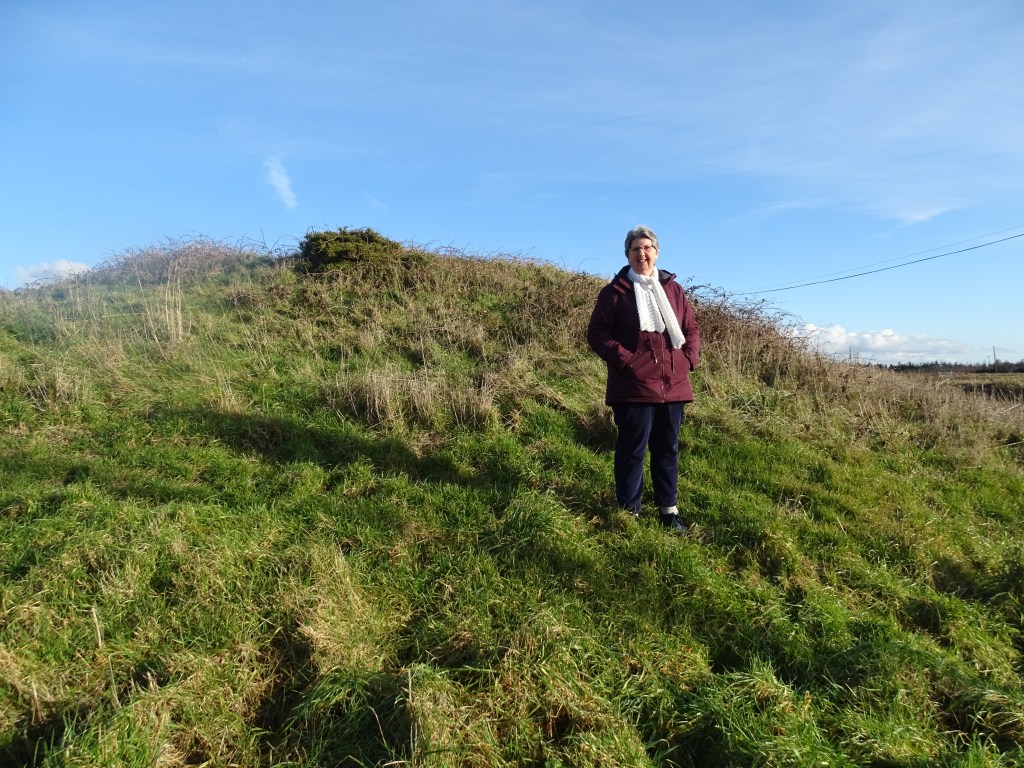
Top of the tumuli
-
2026
And a woman still has to prove her identity every single time. Surely, by now there must be an easier way for organisations to check identity. The Inland Revenue know who and where we are, surely this information could be made available to others seeking verification? I cannot face going through all my papers yet again – wasn’t expecting to need to do this anymore so deleted info from my laptop – in order to take on a study role. I will plough on with my research and hope to find some funding elsewhere at some stage.
And another thing….a young lady has just been awarded a new music award…with a sad back story, but I would like to see my friend Iryna Ilnytska achieve a much-deserved wider audience too. She has a back story. Born in Ukraine, family home virtually destroyed in the Donbas, horrendous tales of Russians and Ukraine, she fundraises tirelessly for Ukrainian volunteers and is a suberb mezzo soprano and unique performer. How do some people make it through and not others? It’s a mystery.
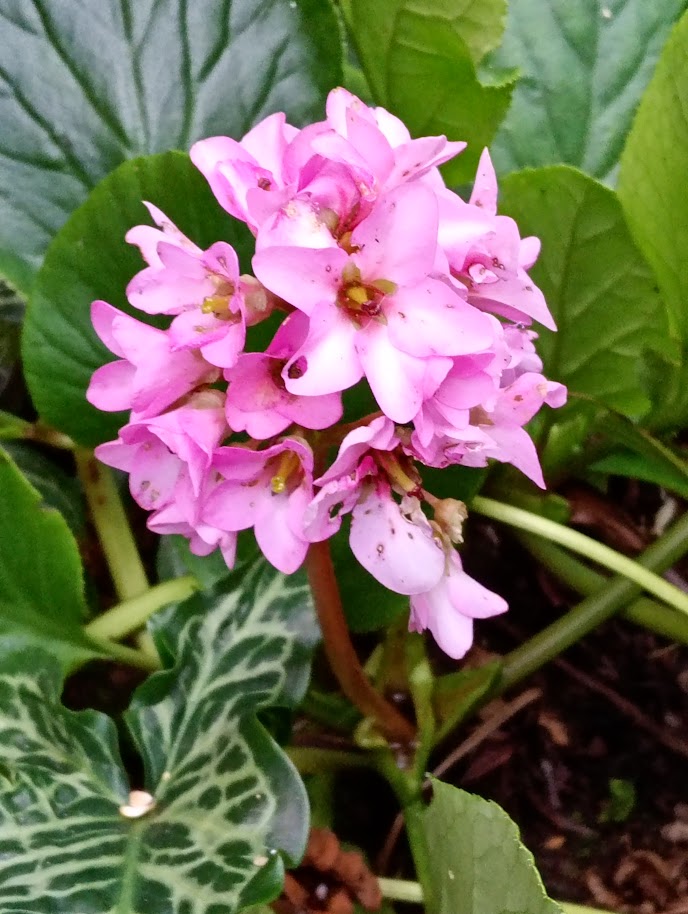
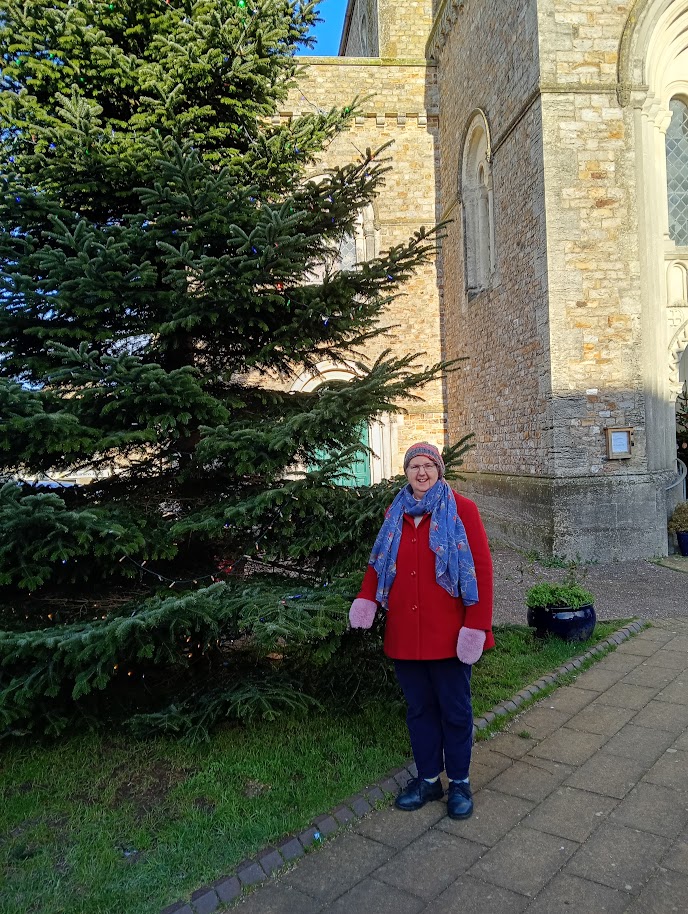
Here is a nice happy photo.
-
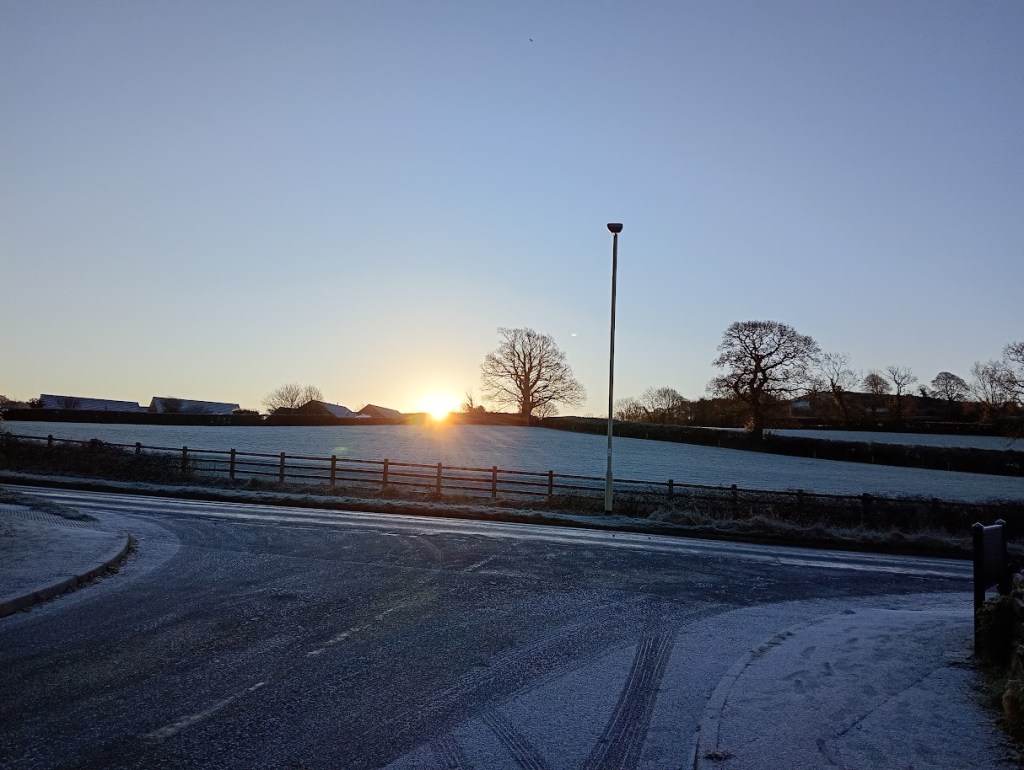
Last of the late sunrises.
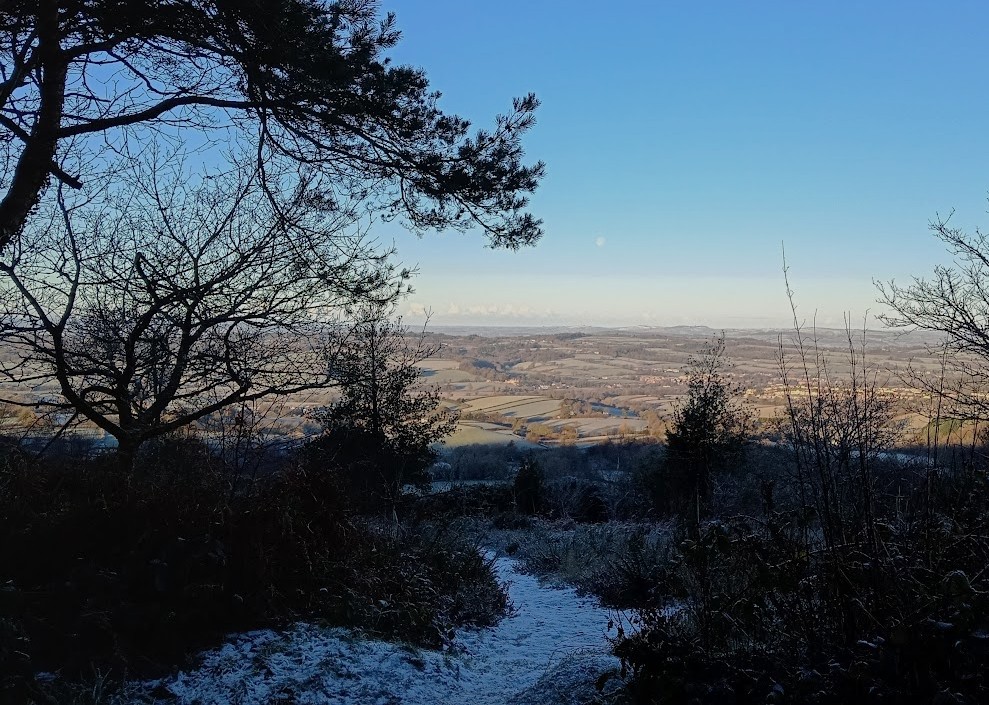
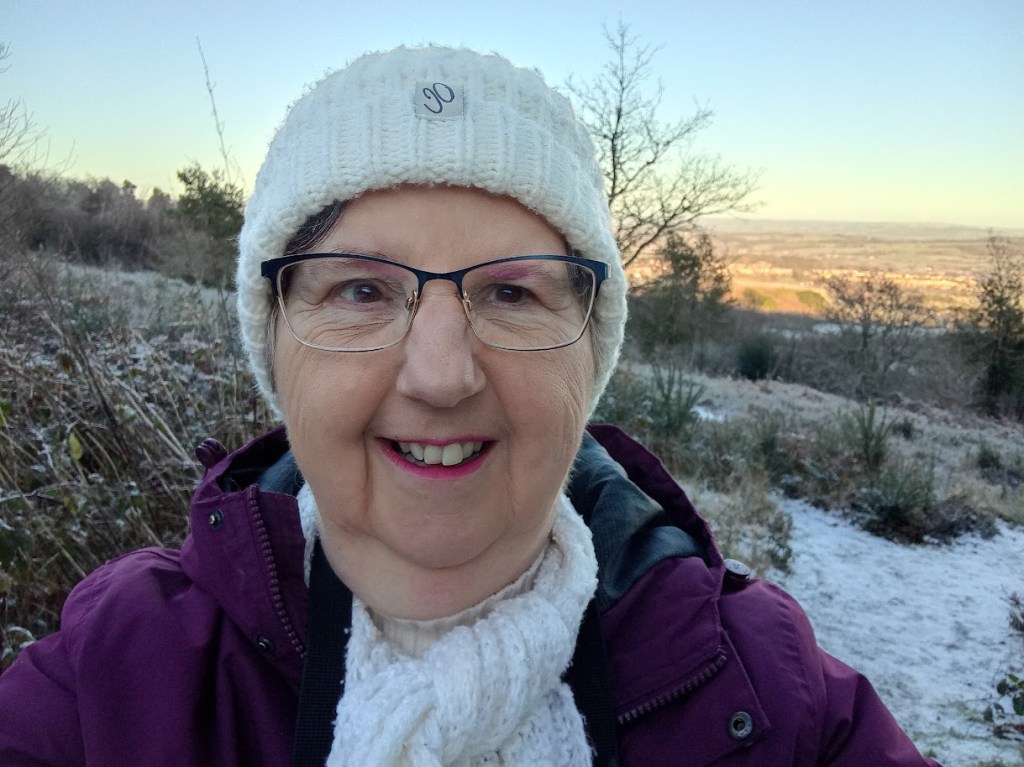
The sun has had a good rest, now it will be back to getting up earlier and earlier. Today is the last day of the late sunrises…so tomorrow will be brighter for those back at work, by a minute, but a minute is a minute! Glad to have time to enjoy the changing seasons, although it was a bit of a rush after scraping the ice off the windscreen, to see the Moon before it was washed out by the bright sunlight.
-
Happy New Year
What an odd occurrence, to have a new year in the midst of a run of the latest sunrises. Doesn’t make sense. The old Yuletide of 6 January makes more sense as the first day of the new year when the sun rises a bit earlier, minute by minute, from then on. Interestingly, the new year varies according to culture and custom around the world even today. For example, the Chinese new year begins in February, the Jewish in September. In times gone by, the Egyptians celebrated in September along with the rising of the Nile. I have been busy researching this for my story series involving the mischievous mouse, Maldwyn, who is busy over on Instagram. This year sees me trying to complete some of the many stories that are half finished. It is difficult to keep up with the amount of adventures that mouse has!
I love January 1st for the new year’s day concert from Vienna and the opportunity to do nothing totally guilt free. Usually, I feel the need to achieve. I tend not to phone people out of respect for late nights, broken nights due to fireworks, and to let them enjoy a day of peace too. Tomorrow though will see me begin to catch up with people to wish them a happy new year. And to start going through my old address book.
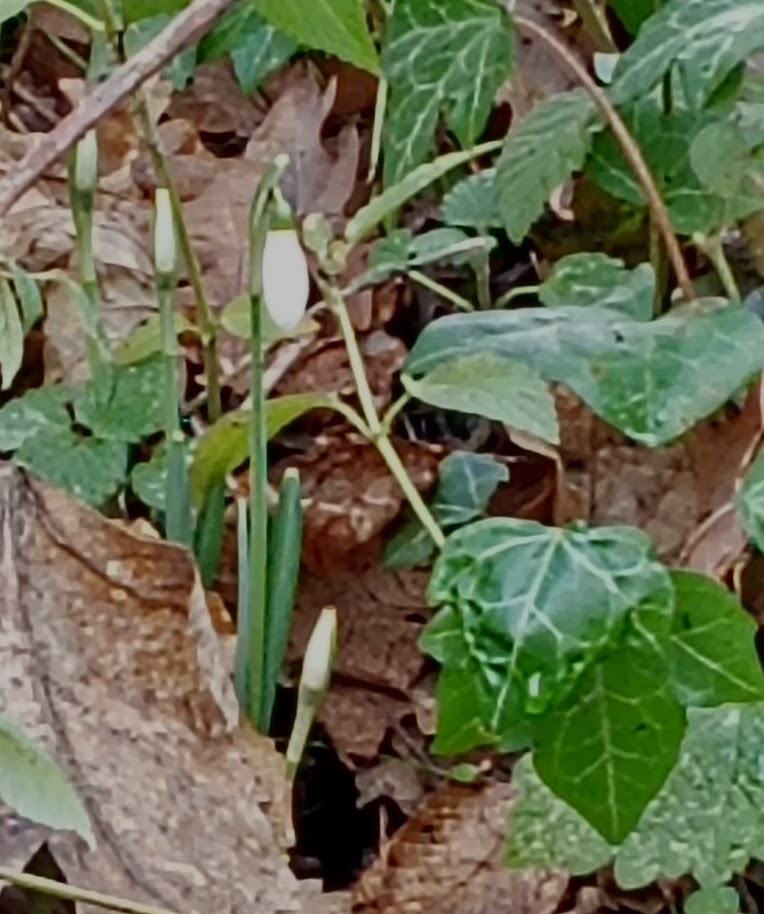
There was a moment of joy on a walk when I spotted the first snowdrop of the year.
-
Stargazing for the New Year
Hello and welcome to another year of stargazing. Among the articles about the Star of Bethlehem I said there would surely be, there was one by a Mark Matney suggesting the object may have been a comet. This is not a new idea, indeed there were several plausible ideas put forward in a book by Mark Kidger, but this Mark’s suggestion is backed up by Chinese records of such an object in 5 BC. Certainly, a comet moves, but it is the standing still over a particular place that causes difficulties. Apparently, the comet in 5 BC may fit the criteria for standing still or at least appearing to stand still.
Now it may not feel like it but we are actually speeding through winter as the Earth moves faster in January than it does in July. This is due to the Earth’s elliptical orbit around the sun as well as the orbit being tilted 23 and a half degrees to the plane of that orbit. A consequence of all this is that solar noon becomes slightly out of phase with clock noon. You can try this should the sun shine!
Although we are now well past the winter solstice, the latest sunrises still occur until 5 January. There are many days when the sunrise is at the same late time, while the evenings are lengthening minute by minute. Fascinating stuff. It’s when thinking about this, you can really get a feel for being on a planet in motion.
What can be seen this month? Well, with the full moon at the beginning of the month, on the 3rd, there is plenty of opportunity for viewing the craters as the moon wanes, as well as moonless nights for stargazing. Do wrap up in layers of wool and wear fingerless mittens to keep your hands warm while still able to use equipment. It is advisable to set up any telescope in daylight so it can adjust to the cooler temperatures.
Jupiter is next to the Moon on the 3rd making that an easy object to spot. There will be glare from the light of the full moon though but you should be able to see the planet which is also a very bright object. At the end of the month, on the 23rd, when the Moon begins waxing, you will find Saturn near the Moon. This time, you may be lucky to see more of the planet before the brightness of the full moon obscures the detail.
When the moon is at first quarter, you will see the pretty cluster of the Pleiades – see how many you can count and let us know. This is a good guide to how dark your skies are. Seven sisters? Or is it 44 or is it more?
If you want a chance to see Mercury, do be careful as this tiny planet is visible just before sunrise in the early part of the month – you have to be ready with any equipment so you can see the planet safely before the sun gets in the way. I have to keep saying this as it is so important – please never look at the sun directly.
Betelgeuse in Orion is one to watch as it is nearing its supernova stage. But no one knows exactly when this will happen. It will have no effect upon Earth as it is so far away – it is approximately 700 or so light years away – with 1 light year being 9.3 trillion kilometres. However, because the star is so bright, it is difficult to obtain accurate measurements. Of course, the annual favourite is the nebula, a joy in the better winter observing months when there is less atmospheric disturbance. A reward for those cold nights. See if you can count the four stars of the trapezium asterism within it.
To the left of the Pleiades is the Hyades cluster, near the red star Aldebaran in Taurus. Although it is not actually within that constellation but appears so from our perspective, in reality Aldebaran is about half way between us and the constellation, and conveniently placed to appear as the red eye of the bull constellation. Elnath, a bright star at the end of one of the ‘horns’ is shared by another constellation, that of Auriga, in which lies Capella, the overhead star of winter. So, with Capella, Aldebaran, and Orion, you are well on the way to locating the big winter hexagon asterism.
Andromeda Galaxy and the double cluster in Perseus are well placed for observing and would make a nice double target for a viewing session. Each of the two clusters contains many bright stars including some red ones, and lie in a spiral arm of our galaxy about 7 and a half thousand light years away. It is from Perseus that you get the Perseid meteor shower in August. The galaxy appears as a fuzzy smudge to the naked eye.
Another star of the winter hexagon, Pollux is one of the two stars of Gemini. Did you see any meteors from the Geminids in December? We saw one or two when out and about in Sidmouth. They were, apparently, very good this year. The partner to Pollux, Caster is actually 6 stars, made up of 3 sets of binary stars. There is a lovely open cluster made up of trails of stars between Gemini and Taurus, M35 containing over 100 stars.
Well, there is a certainly a lot to enjoy and also some excitement in the coming months as NASA prepares to launch another rocket in its Artemis mission in preparation for future human landings on the Moon. It is hoped to set up a lunar base which will act as a stepping stone to Mars.
Happy New Year of Stargazing and thank you for listening.
Karen Hedges
January 2026
-
Christmas bonus
Just watching the lunchtime news…apparently one Christmas meal costs nearly £40. Eh?! I’ve just spent £40 on a massive amount of vegetables, and a large turkey in Lidl. Oh, and I make a Christmas pudding in October which means I can buy the ingredients a bit at a time. It’s not only cheaper, but tastier than bought puddings. I make my own, rather large, pigs in blankets with separately purchased sausages and bacon. No fancy dressings, just good quality food.
Many people will receive homemade truffles this year…if I haven’t eaten them all. They freeze well but are somewhat addictive.
Christmas is an emotional time of year and can be hard for many people so here is a poem to help :
Christmas is hope
is love
is healing
coming to terms with things in the past
is a pause in the bustle of life
The present is holding on
throughout the year
to the peace that comes at
Christmastime

 Karen Hedges