Report of visit to Sherwood Observatory 27 July 2026
On arrival we were warmly welcomed by the staff and volunteers. After having our tickets checked, we looked at the exhibits outside the planetarium. These included reference to a local engineer who had made some spectroscopic equipment for a certain Sir Norman Lockyer. There was a fine case of globes, orreries, and telescopes. A video was running explaining the history and development of the site, a former waterworks, as it transformed into the Observatory and Planetarium it is today. Other people also gradually drifted in to enjoy the displays before the show. Visitors are admitted up to 45 minutes beforehand and are also welcome to continue exploring after a show.
We fortified ourselves with coffee and cake overlooking the Nottinghamshire countryside and browsed the shop displays. The small café was run by a local college as part of their learning programme.
The immersive full dome show, a voyage through the solar system, was a roller coast ride of sights and sounds. I particularly enjoyed the journey through a large orrery and a close-up diagram of what the sun’s surface is like. The show was presented by a paid professional astronomer who ably dealt with a variety of questions from the audience.
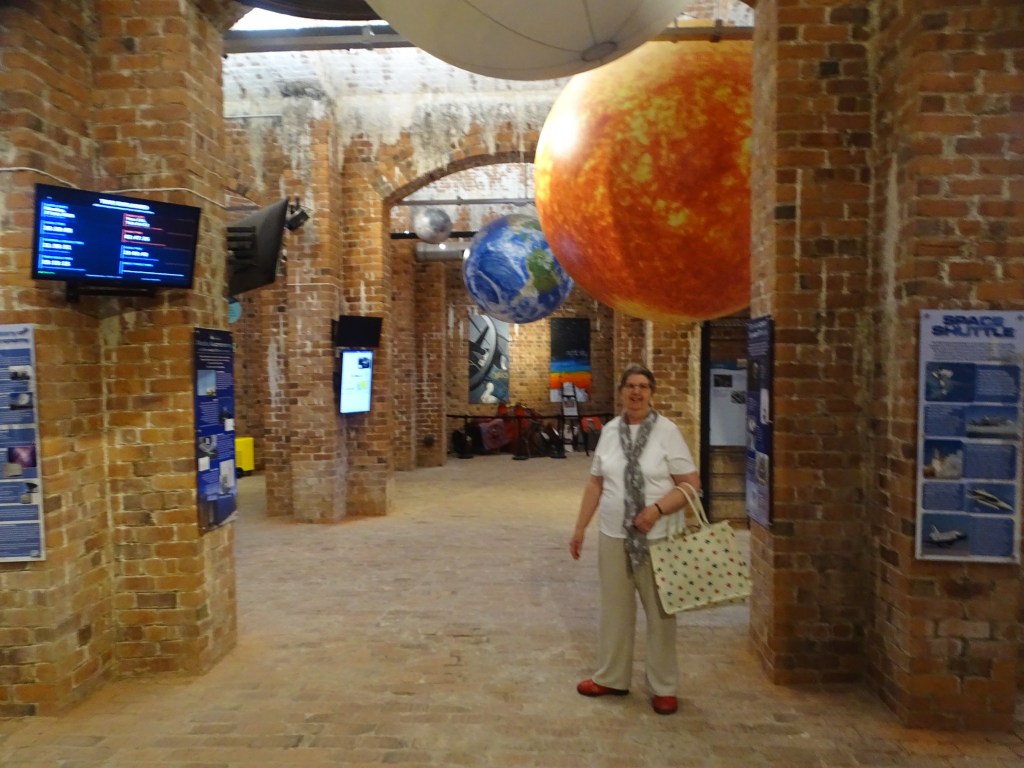
After the show, we ventured down to a lower level beneath the planetarium, where there was a further display area. This was a brilliant space exhibition with well-lit and interesting objects in large display cases, over which hung a series of large models of the planets and the Sun. There were models of rockets, a Lego space station, real engines, a telescope project, and lots of information about space and time. The whole planetarium building is built around an old water works – recycling indeed! The small adjacent dome housing a telescope was not open when we visited.
We then chatted to the chair, Dr Steve Wallace, who explained how Sherwood has evolved. He said they had had an outside review of their governance procedures which had been more than worthwhile, a local college ran the small café and provided all the refreshments, and they had some paid staff to complement and support the team of volunteers. The volunteers were treated to a show and a buffet now and again as a thank you for their efforts, as well as free drinks when on duty. Steve explained that their board of trustees contained a mix of specific roles with a couple of non-role specific people who considered strategic planning and longer-term planning. Following investment and reorganisation, he shared that their membership and their income had both risen exponentially. They were working hard to encourage the members to volunteer a couple of times a year; although people were keen to be trained, there were fewer signing up to volunteer.
Before we left, Karen Barker, the administrator/receptionist shared her excitement at having landed her dream job which included outreach as well as coordinating bookings and volunteers. She told me she had also been involved in campaigning for the continuance of the Sky at Night programme following the death of Sir Patrick Moore and subsequently attended a reception held by Sir Brian May at Sir Patrick Moore’s home.