

-
w/e 23 August 2026
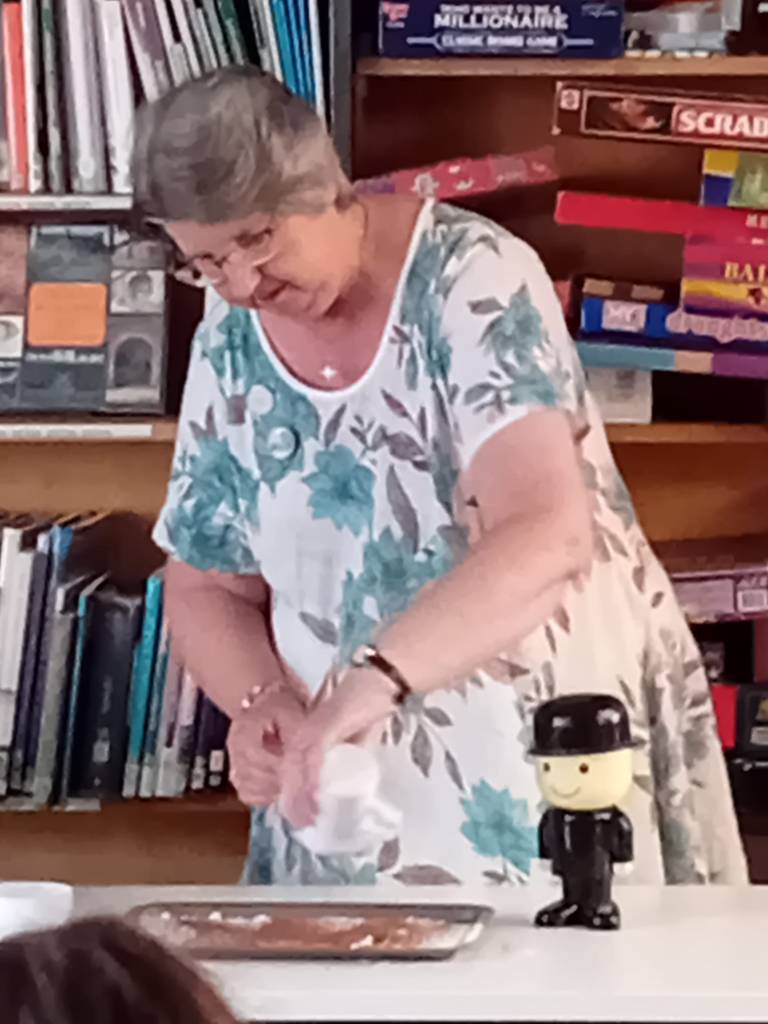
The second talk about the Moon, this time with rockets and craters, was also well-received. A young girl came up afterwards to say it was the best talk she had been to, and that she had been to lots! Again, everyone commented on my use of hoola hoops to explain the orbit of the Moon. Simple, yet so effective. This group were treated to a crater making display, using flour and cocoa onto which I dropped a marble. The effect is strikingly realistic.
I had a meeting with the archivist at the University of Exeter who kindly offered support and information for my research and work at the NLO. Altogether, a week full of positives.
-
It’s a different world
w/e 16 August
Times have indeed changed. I have just read a Facebook comment that ‘My little girl is wanting a birthday party for her 6th birthday but doesn’t want to go to the local sports centre as she’s been to so many there already.’ Oh my word, my friends and I at that age only had small parties, tea parties that is with sandwiches and a few games, at our homes. One friend had a fancy-dress party – that was amazing as it was so unusual. My 21st birthday party was indeed a special event, although still held at home. On the other hand, my 18th (this was just coming in at the time) involved a group of friends going out to a nightclub for dinner and a show. That was posh and grown up!
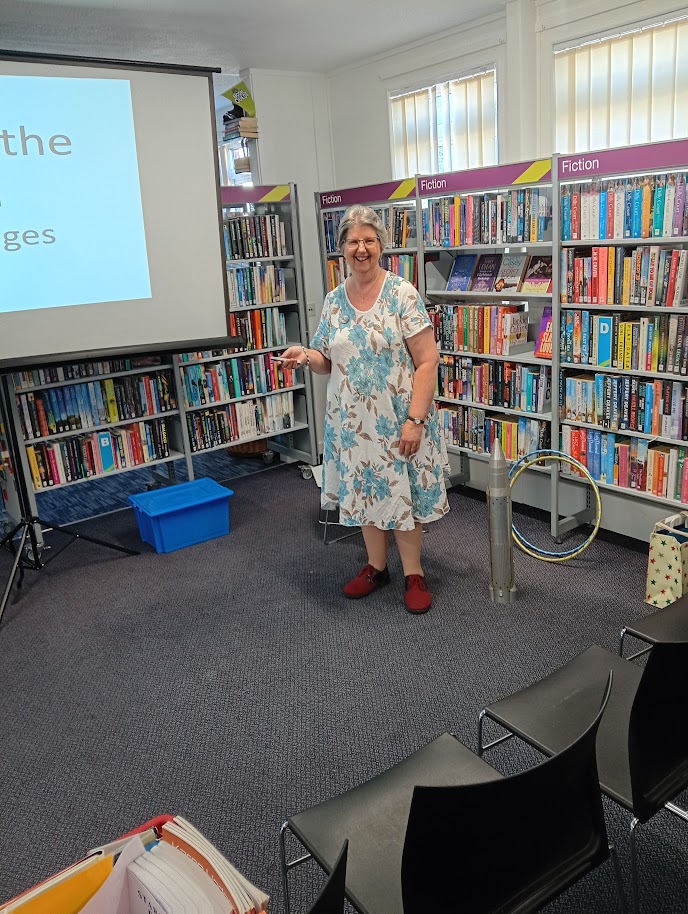
Some things, however, do not change. The attraction of space to young girls remains strong. I am happy to report that following a talk I gave at Seaton Library yesterday, an 8 year old girl came to me with lots of questions about space and who shared a pack of stickers with me as a thank you. She wants to study space. There is hope. I made her laugh when I remarked that I was about her age at the time of the first Moon landings and loved all things spacey! Then felt really sad that no one had landed on the Moon since 1972. Using hoola hoops to explain the motion of the Moon around the Earth went down really well, with many saying how they now understood why the Moon was high in the sky at times.
And then I read the newspaper. An article described a recent mission to the Moon’s dark side. Oh dear!
-
Special Eclipse post 12 August
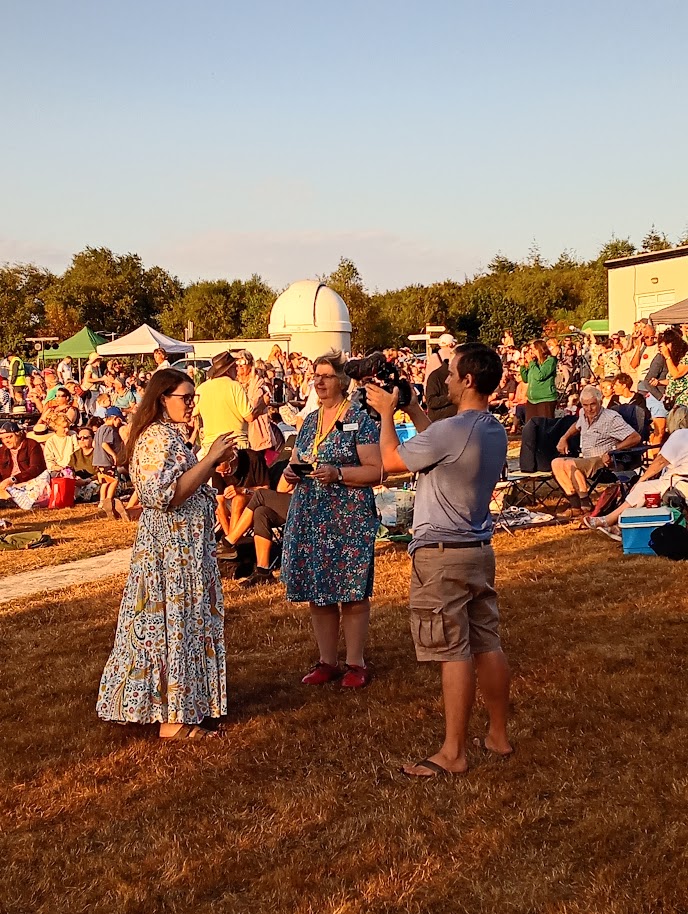
The Moon is my friend. I felt seen and heard as the Moon gave us respite from the heat and light of this very hot summer. With a talk coming up on Saturday, I am grateful to have some fresh eclipse photos to show. It was a fantastic experience to be interviewed by BBC Spotlight live, their interviewer, Hattie McCann was friendly and put me at ease. It was a great opportunity to spread the word about the Lockyer telescope and the potential for the site. If you are interested to learn more, please look up the Norman Lockyer Appreciation Society page on Facebook.


-
A busy week, leading to a shorter blog
Struggling to process a big news item about adult literacy, that there is a shortage of volunteers. Well, I loved my work with LearnDevon working with adults to help with their literacy and numeracy. Work hours dwindled until it was not worth working. There was a demand, still is a demand, and I have the skills. I am struggling financially and cannot afford to undertake the amount of voluntary work that is required.
Some good news though, an email arrived from the University of Exeter Old Library to the effect that I shall receive some support (probably not financial) but certainly valuable encouragement and indeed they have endorsed my project to write up about my finds in the archives in addition to my research into Sir Norman Lockyer.
Sadness that my mother is uninterested in my achievements or interests. She doesn’t ask, I don’t say any more. I did mention my talk on Saturday at the end of a list of what we were doing this week. No response.
So, a shorter blog this week as I try to get on top of my other paperwork to make space physically and mentally for this work.
-
Sherwood Observatory
Report of visit to Sherwood Observatory 27 July 2026
On arrival we were warmly welcomed by the staff and volunteers. After having our tickets checked, we looked at the exhibits outside the planetarium. These included reference to a local engineer who had made some spectroscopic equipment for a certain Sir Norman Lockyer. There was a fine case of globes, orreries, and telescopes. A video was running explaining the history and development of the site, a former waterworks, as it transformed into the Observatory and Planetarium it is today. Other people also gradually drifted in to enjoy the displays before the show. Visitors are admitted up to 45 minutes beforehand and are also welcome to continue exploring after a show.
We fortified ourselves with coffee and cake overlooking the Nottinghamshire countryside and browsed the shop displays. The small café was run by a local college as part of their learning programme.
The immersive full dome show, a voyage through the solar system, was a roller coast ride of sights and sounds. I particularly enjoyed the journey through a large orrery and a close-up diagram of what the sun’s surface is like. The show was presented by a paid professional astronomer who ably dealt with a variety of questions from the audience.
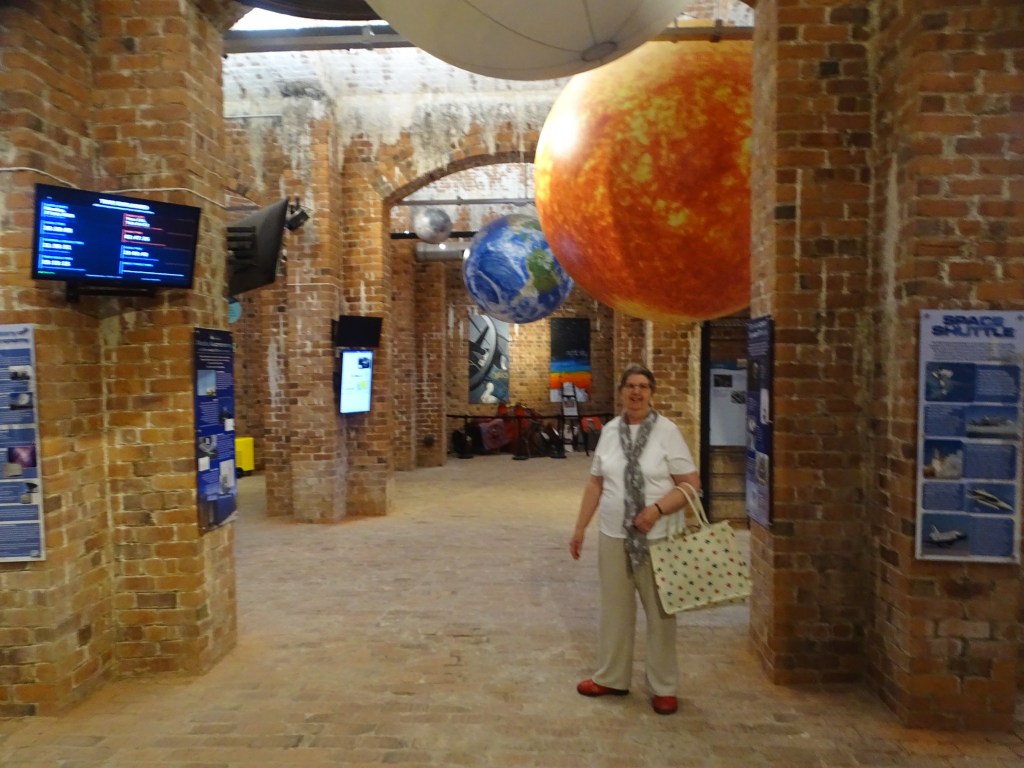
After the show, we ventured down to a lower level beneath the planetarium, where there was a further display area. This was a brilliant space exhibition with well-lit and interesting objects in large display cases, over which hung a series of large models of the planets and the Sun. There were models of rockets, a Lego space station, real engines, a telescope project, and lots of information about space and time. The whole planetarium building is built around an old water works – recycling indeed! The small adjacent dome housing a telescope was not open when we visited.
We then chatted to the chair, Dr Steve Wallace, who explained how Sherwood has evolved. He said they had had an outside review of their governance procedures which had been more than worthwhile, a local college ran the small café and provided all the refreshments, and they had some paid staff to complement and support the team of volunteers. The volunteers were treated to a show and a buffet now and again as a thank you for their efforts, as well as free drinks when on duty. Steve explained that their board of trustees contained a mix of specific roles with a couple of non-role specific people who considered strategic planning and longer-term planning. Following investment and reorganisation, he shared that their membership and their income had both risen exponentially. They were working hard to encourage the members to volunteer a couple of times a year; although people were keen to be trained, there were fewer signing up to volunteer.
Before we left, Karen Barker, the administrator/receptionist shared her excitement at having landed her dream job which included outreach as well as coordinating bookings and volunteers. She told me she had also been involved in campaigning for the continuance of the Sky at Night programme following the death of Sir Patrick Moore and subsequently attended a reception held by Sir Brian May at Sir Patrick Moore’s home.

-
Derbyshire Days
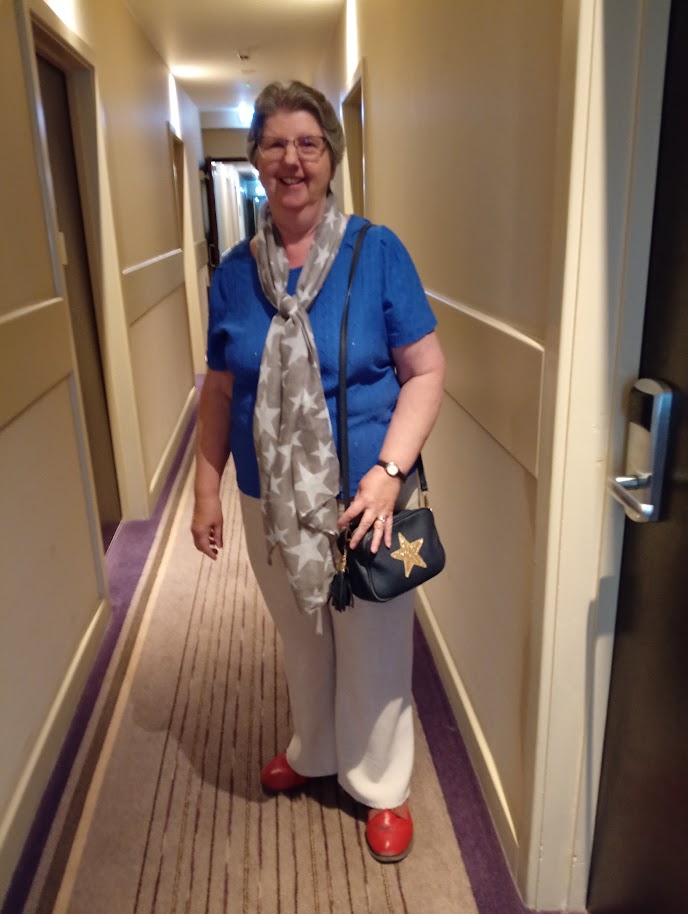
The drive to Derbyshire for a family wedding reinforced my view of travelling. Driving is no longer as fun as it used to be. Larger cars, heavy traffic, roadworks, bridges being built to connect who knows where to who knows what, the speed of traffic, the difficulties of navigating in a new area all combined to make me yearn for a comfy coach seat.
Derbyshire days included a lovely day out at the Butterley Railway. We enjoyed a long chat with one of the volunteers who explained that the site was really two separate groups, one running the trains, and the restoration group restoring steam trains. The place was a pleasant walk from our hotel, although we caught a bus back to the town centre. Not much in the town, so walked back to the hotel.
The wedding was a colourful, friendly affair and an opportunity to catch up with cousins and people not seen for a very long time.
Sherwood Observatory was a real highlight and has its own separate report for the benefit of my own observatory. Uploaded as a separate part 2 blog post.
Newstead Abbey provided a pleasant background to a day with one of my cousins. The former home of Lord Byron, the garden had been left untended but the paths were kept maintained and the lake with its array of water lillies. The abbey itself sounded of interest although we did not go in that day. It was quite warm and humid so we sat and chatted and then chatted some more over a cup of tea in the nice tearoom.
The following day we took the bus to Derby. I had not been there before and was pleasantly surprised by how clean and bright it was, with a pleasant riverside walk. Our aim was to locate 27 Queen Street, the childhood home of John Flamsteed. This we did and then found the museum and art gallery with its special exhibition of Joseph Wright paintings. They were stunning. His depiction of emotions and candlelight was awesome. We had an interesting conversation with the volunteers there.
And then it was time to drive home. I chose to make a short detour to see a Peak District village where we stopped for a stroll and a breakfast. The traffic on the M42 is something I never with to experience again. It took me a few days to recover, hence the late uploading of this post. My long-distance driving days are behind me sadly. It is a hard thing to admit to.
It is with disbelief that I hear a news item about vegetables that are ‘too large’ being donated to those who need help. I would have bought them. There seems to be an issue with standardisation, surely, as if they were on sale in a local greengrocer, I am sure many people would buy them.
-
Odysseys
Seeing culture began this week with enjoying the new film about Homer’s Odyssey. At three hours this was a committed watch, thrilling after a bit of a slow start, although some time was needed to set the scene. Although I still don’t understand how Odysseus got lost on his way home from Troy. The special effects were amazing although my head was spinning from these and the sounds for many hours afterwards.
The day was also the anniversary of the first moon landing. I am still enthralled by the Moon and was delighted to receive a photo via WhatsApp of the Moon as Dawn sees it in Australia. It is indeed upside down with the crescent waxing from the other way round. It complements my photo of the same crescent nicely, just in time for a talk at Seaton Library.
A day trip to Lynton via the steam railway at Woody Bay was a real treat. The coach collected us promptly at 9am and we went on a tour of East Devon collecting little pockets of people before heading up the M5 to North Devon. On arrival at Woody Bay, it was off the coach and onto the train in a seamless transition of transport. We chugged along through the beautiful countryside and back again.
From there we were whisked away to Lynton to enjoy a couple of hours exploring the many shops and cafes or simply to enjoy the rest of a picnic overlooking the stunning coastal scenery. The driver kindly dropped us off at our local bus stop so we did not have to walk back up from the high street and we were home indoors just after 7pm for a late tea. It was relaxing not to have to worry about navigating, other drivers, steep hills, car parks, while enjoying the beautiful scenery. Coach travel is the way forward.
Another week, another odyssey
w/e 2 August
-
Art, angst, and some fun!
It’s relentless. And exhausting. First we had 10 months of chilly rain, then a heatwave, then a cold spell, before wave after wave of heat. Having spent Monday recovering from the weekend, I then spent Wednesday recovering from Tuesday. Sadly, I had to go to a funeral of a friend which sparked memories of times never to come again, indeed a friend remarked recently ‘we are all scattered now’. The train journey to Portsmouth went well thankfully, but the return less so with no air-conditioning. I melted afresh. We were given a free bottle of water on one train. The service and burial were obviously emotional but delivered well by the young, enthusiastic priest. It was held in Portsmouth Catholic Cathedral. Before the service I sat for a while in the pretty rose garden.
Transport issues. Again. Having dropped my car off at the garage for a service, I tentatively booked a train ticket for Tuesday before walking to the High Street to catch a bus up the hill. The bus left early so reached the next stop at 0925. Too early for a lady to use her bus pass…How ridiculous! The service is hourly so makes it hard for people to wait for the next one, and if it was early, then that is not the passenger’s fault. I do not like unfairness.
NLO issues continue unabated despite me calling out some really untenable behaviour. Sadly, one of the best Astroscouts has now left the group due to the issues.
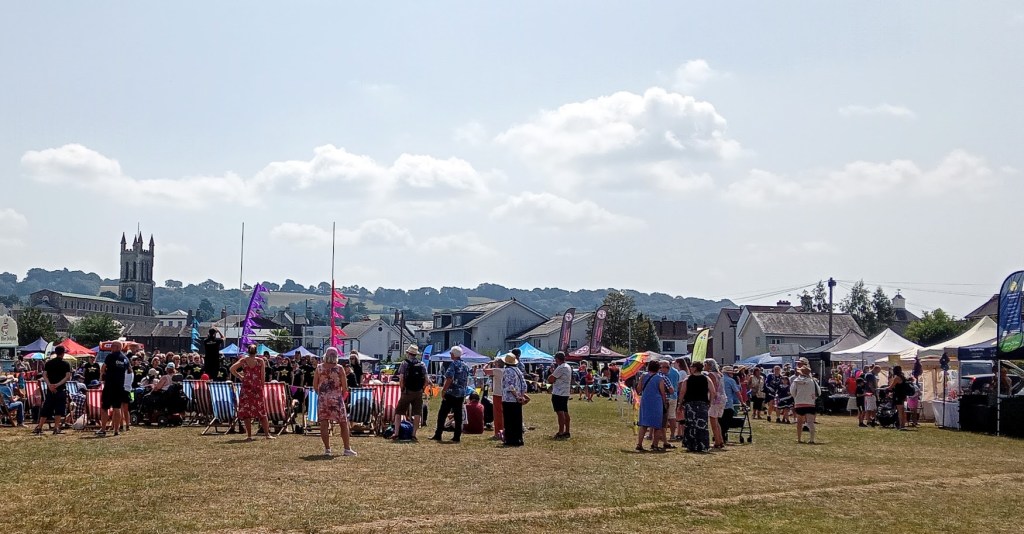
Charter Day at Honiton was a fun-filled day full of music, colour, and friends. There was the colourful Samba music group, the Rock Choir, Morris dancing, charity stalls, craft stalls, and a demonstration from Gittisham Forge in making intricate metalwork. I met a Devon policeman aptly named Fudge. The event was rounded up in the evening with a delightful concert by Honiton brass band in the Millennium Green where drinks and snacks were available. We did not know about the latter but will remember for next year. The cakes looked very tasty.
With school holidays looming, there is the annual whinge about their length and the cost of keeping children entertained. What happened to letting them make their own entertainment? I read and read and drew and played with friends outside. My own children played with friends, drew, made Lego models, read, we took picnics to the park. I was ‘farmed out’ to relatives although at the time it was billed as a holiday with grandparents, followed by a holiday with an auntie and uncle. I had a great time. This was in the 1960s and ‘70s. My own children sadly did not have those opportunities, just the occasional weekend with grandparents. I was lucky to not be working when they were young but, even so, did not feel they needed to be entertained by me all the time. We had a reasonable sized garden which was a help as there was room for a paddling pool, a small slide, and a sandpit. There was a lovely play area and lake a short walk away as well which we used to visit. A group of youngsters roamed between houses making up games between them. A real community effort in keeping an eye on them ensued. Happy days. This was in the 1990s.
Thankfully, the week has ended on a much cooler and fresher note. Let’s hope some rain appears soon.
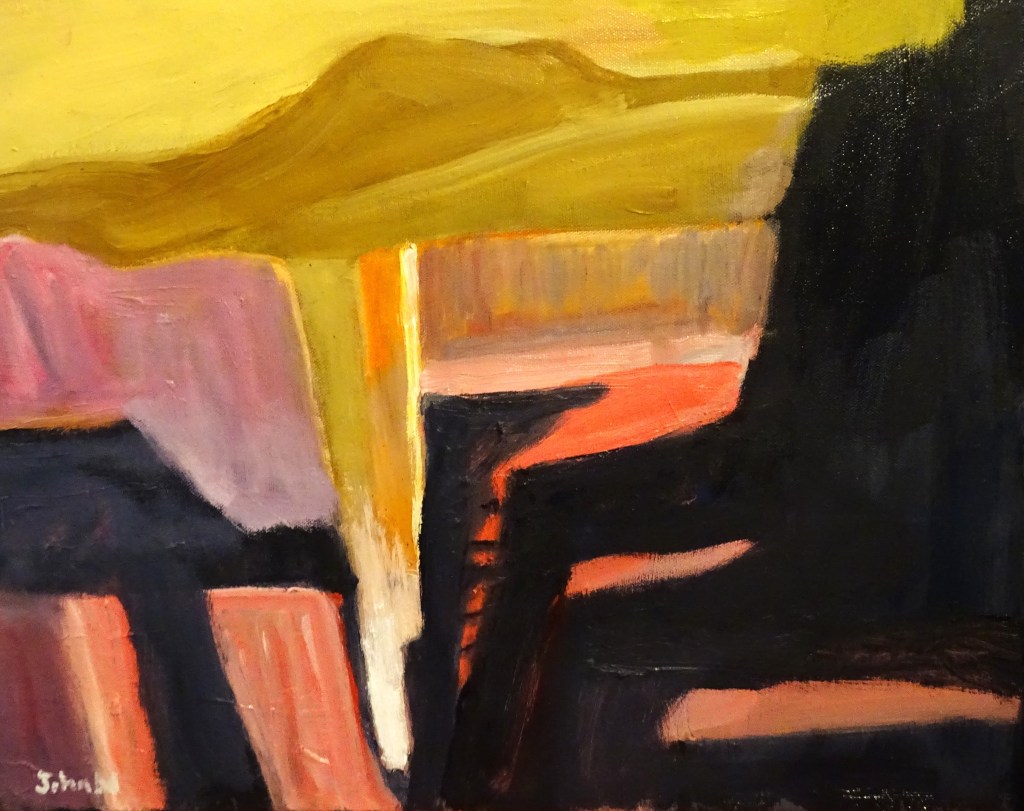
My brain melted in the heat, but I hope it wakes up this week and gets back on track to promote my friend John’s artwork. He is an amazing space artist and is seeking to raise funds for our local Observatory. Please contact me to learn more.
-
A feast for the senses
A nice catch up with friends in their cool garden before having a picnic lunch in Seaton began the week. The sea was as blue as the Med and just as hot. We took our photo against the backdrop of a palm tree and could indeed have been in far flung sunny climes.
Tennis fever took over progressively as British wildcard, Arthur Fery, fought his way to the semi-finals of Wimbledon with some very watchable tennis. He was a joy to watch. Sadly, his semi-final opponent towered over him in every respect. However, I think Fery is one to watch in the coming years and brings back the excitement of Wimbledon once more.
The heat continues and is no longer news. We hole up indoors when possible. Going out is something we avoid unless necessary. Even so, it was too hot to even think let alone do anything. Sleeping is difficult with the build up of heat during the day. By 5am it has cooled, so a couple of hours cooler sleep before getting up seems to be the way of the week.
The week ended with a veritable feast of culture. First up was the Wren summer concert comprising all the choirs and orchestras across Devon. Much cake and tea were consumed during the interval amidst lively conversation. Friends old and new, music new and familiar filled St David’s Church in Exeter. It was uplifting and life-affirming, allowing all worries to be left at the door. The all-inclusive orchestra was exactly that with some lovely singing and instrument playing and, most important of all, everyone having a part to play with broad smiles on all. Appreciative applause from the audience echoed around the church.
I loved the exuberant music from the Devon Folk Orchestra, real foot tapping joy. And then there were the various choirs, including Roy’s Wellness Choir who sang really well despite the heat and health issues. We were glad we went.
We had nearly turned back and gone home when our train to the city was delayed. However, we decided to go although we would only just be in time. After the concert, the joy was tempered by the cancellation of our train. We played safe and caught a bus home…only to find it was the last no. 44 bus to Honiton and ended its journey in the High Street, not the usual road near us. Delay repay is a mockery as having spent half an hour filling in the forms and photographing the tickets, we will receive £2.74 between us!
I mentioned the trains, I mentioned the heat…but it was the humidity that did for me. I melted like an ice cube in the sun. It took until 11pm to actually feel better and ready for bed.
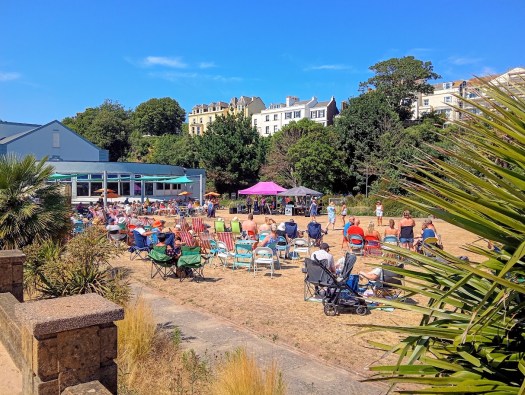
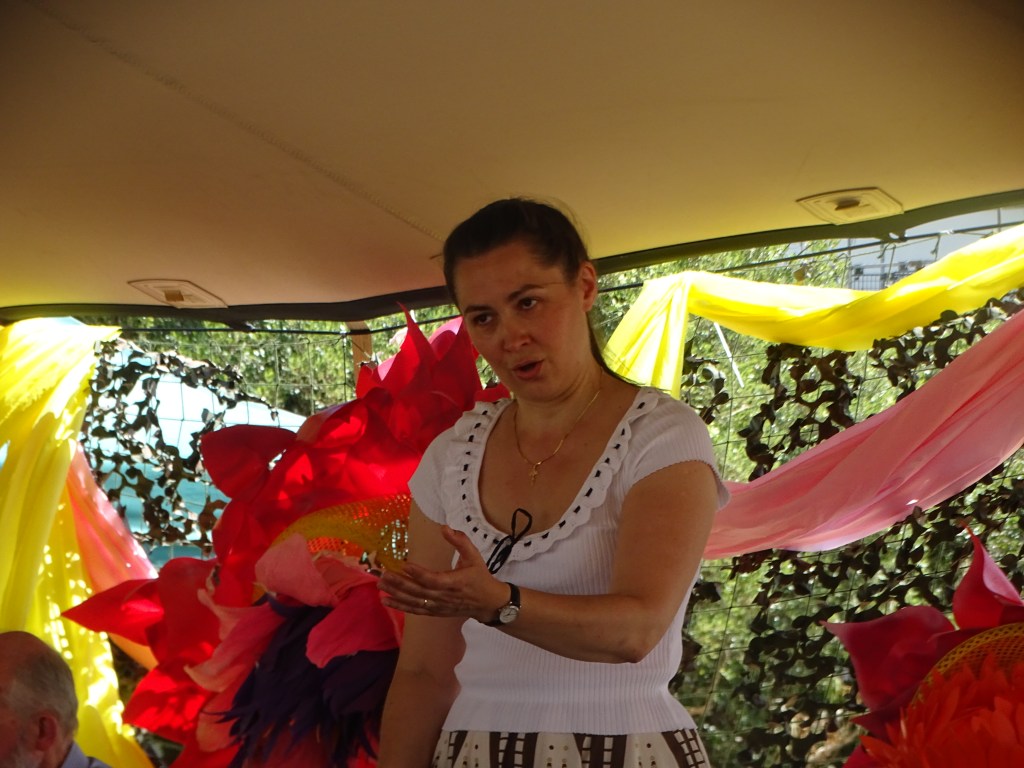
Undaunted by the heat but daunted by the trains, I drove to Exmouth for Iryna’s performance at Exmouth Festival. The venue was in the grounds of one of the seafront hotels. Around 40 people listened to her, and became enraptured by her. She and pianist John Draisey did well against the backdrop of gales, noise from other performers, and people drifting in and out. We melted some more but were glad to have been there. Her face lights up at the sight of some familiar faces.


-
Strawberries and Cream
The week began with a conundrum. My shopping came to £11.33 and I handed the cashier (an unsmiling young lad) a £20 note. The change was handed to me…£12. Mmmm I asked for the receipt which he also scrutinised but evidently floored by it. I gently suggested that £9 was the change and looked at the receipt. I was also floored by it. He took back the £12 and gave me £9. Still unsmiling and somewhat cross as well by now. I was trying to be kind as I thought he would be in trouble if the till did not balance. I later returned to the customer service with the till receipt as I was still not sure the till would be correct, especially as I had seen that the £12 change nearly matched the cost of the shopping, but the amount keyed in had been £40.66. Although I had not been given the change the till said of £29.33! The customer service assured me that the till would actually see that everything was there. I left. Uncomfortable but satisfied I had done everything I could.
Midweek contained a double treat. Coming out from the theatre to see a large, full, ‘strawberry’ moon, rounded off a lovely evening enjoying great acting in an Alan Ayckbourn play. Although the play was one of his later ones and not so enjoyable as the earlier ones, the acting was superb. Live theatre is always a treat. Seeing a full moon just above the sea is always a treat. The two on one evening was amazing.
I enjoyed a comfortable train ride to Salisbury where I met up with an old friend for a pleasant amble around the town inbetween teashops. We visited Mompesson House which I had not been in before. It was a comfortable home containing beautiful paintings and Regency furniture and a well-presented library of ancient tomes.
On Saturday, I bravely introduced myself to the neighbours over the other side of our boundary hedge. They were most agreeable to keeping the height of the hedge to block out some lightbulbs on their garage, when I explained I was an amateur astronomer. They have a neighbour opposite them who has his own observatory in his garden, and who was from the Met Office. Their daughter also attended Colyton so I may know them anyway!
Saturday afternoon was exhausting…with armchair sport! The Wales v Fiji rugby was everything you could wish for, including a nice win from the talented young Welsh side, one of whom managed a really sneaky manoeuvre to stop a Fijian try. British ‘wildcard’ tennis player, Arthur Fery, won his match after a strenuous 5 sets of gloriously clean tennis. Lovely to watch.
And so, the week came to an end, rounded off by a local garden visit in the warm sunshine. Not only was the garden very attractive, but there were several seating areas in which one could relax with a cup of tea and a generous slice of strawberry and fresh cream cake.
 Karen Hedges